Building a Double Leaf Estate Gate From Footing to Latch in Georgetown, TX
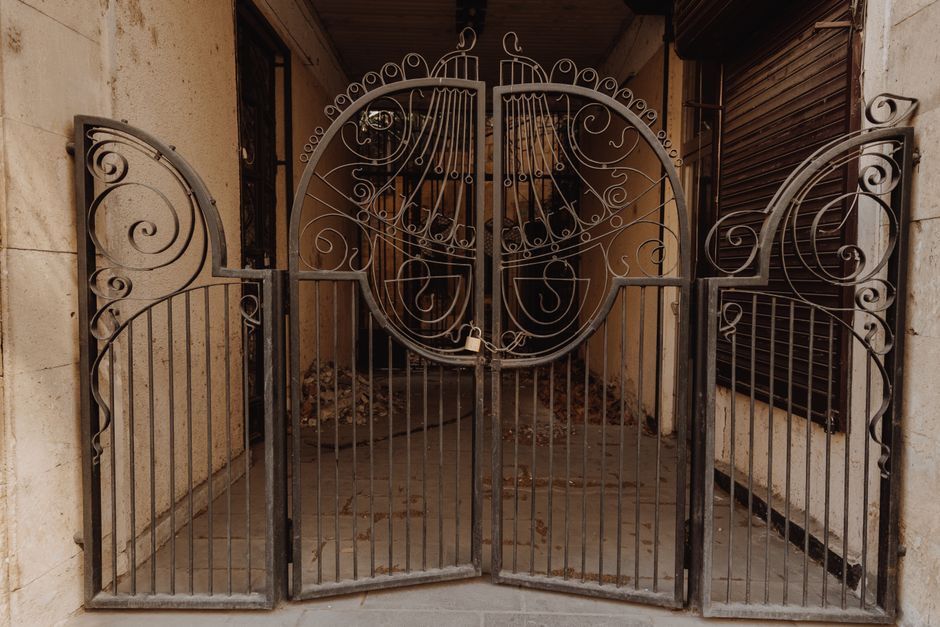
A double leaf estate gate is built in a fixed order: ground first, posts second, frames third, hardware last. Every step depends on the one before it, and the mistakes that cost the most are the ones made early, in the dirt, where nobody sees them again once the concrete cures. This is the sequence a crew follows on a Georgetown, TX lot, with the measurements that decide whether the gate still swings square in ten years.
What happens before anything is dug?

Before any hole is dug, the crew walks the entry, measures the opening and calls for a utility locate. The walk answers the questions that drawings cannot: how the drive slopes, where runoff travels, how far the leaves will swing and what sits in that arc. Georgetown lots often fall away toward a drainage swale, and a gate hung without noting that grade will drag on one side or leave a gap on the other. The opening is measured at the top and the bottom, because posts and columns are rarely identical in width at both heights. Those numbers set the leaf widths, the hinge positions and the clearance on each side. Nothing is cut until they are written down and checked a second time.
How deep do the posts go in Georgetown ground?
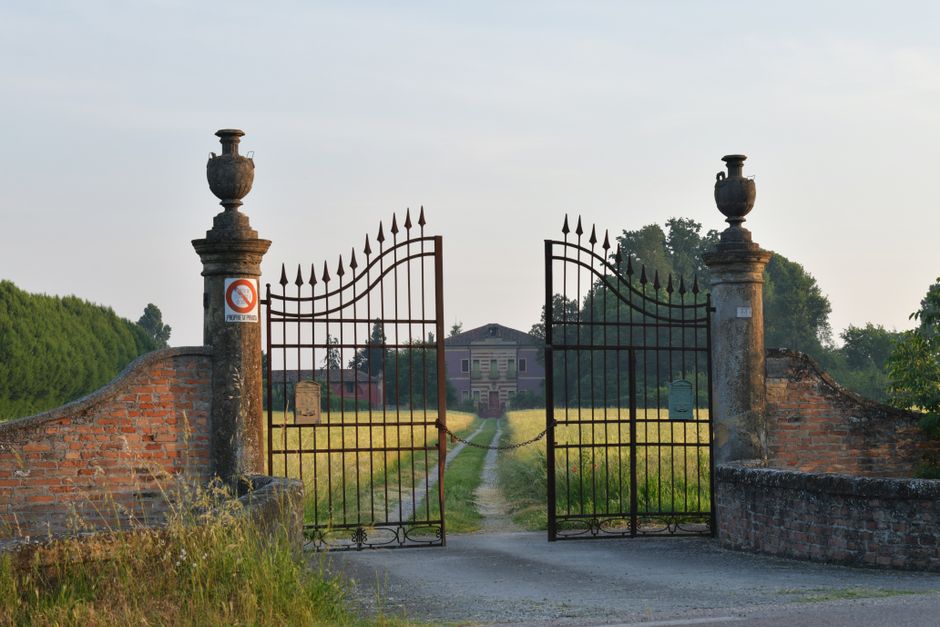
Posts go in at least a third of their height, which means three and a half to four feet for a ten foot post. In Williamson County that depth is rarely easy, because limestone soil and caliche sit close to the surface and stop a standard auger. A rock bit or a hammer drill gets through. The hole is cut wide, at least three times the post width, and belled at the bottom where the soil allows, so the concrete resists rotation as well as settling. A few inches of gravel at the base gives water somewhere to go. The post is set plumb in both directions, braced, and left to cure before it takes any load. A hinge post carries the whole leaf, so it gets more attention than any other part of the job.
Why does the post tubing matter?
Post tubing matters because the post is a lever, and the leaf is pulling on the top of it. A six inch steel tubing post with a heavy wall resists that pull. A four inch post of thin wall bends a little with every swing, and the bend becomes a lean. The wall thickness is chosen for the leaf weight and width, not for appearance. Posts are capped so rain cannot run down the inside, and a small drain hole near the bottom lets condensation out. The same tubing choice shows up again at the frame, where the same logic applies: stiff material at the places that carry load, lighter material where it only fills space.
How is the leaf frame built?
The leaf frame is built flat on a table, square before it is welded and square after. Two inch tubing with a wall of one eighth inch or more suits most single leaves, and heavier stock goes into wide or tall ones. Each corner is welded all the way around, then ground smooth so the finish can cover it evenly. A weld that looks fine but only holds from one side cracks at the toe after a few thousand swings. Pickets are spaced evenly, usually about four inches clear, and welded to the rails with the same care as the corners. A diagonal brace or tension rod goes in last, running from the top hinge corner down to the latch corner, so the weight of the leaf pulls it tight.
What does the finish process involve?
The finish process starts with bare steel and removes everything that is not steel. Mill scale, weld spatter and oil come off by blasting or grinding to bright metal. A zinc rich primer goes on first, then the topcoat, and a baked powder coat holds up best against Central Texas heat and the occasional hail stone. Hollow tubing ends are sealed or drilled for drainage so water cannot sit inside and rust the frame from within. Edges get a second pass, since coating thins at sharp corners and rust starts there. A leaf finished carefully in the shop outlasts one touched up in the field, because the shop can control the surface and the cure.
How are the hinges chosen and set?
Hinges are chosen by leaf weight, and the heavy ones carry the load on a thrust bearing instead of the bare pin. The top hinge is adjustable, so the leaf can be raised or lowered a few millimeters after hanging to close the gap at the latch. Hinge pins are set in line, one directly above the other, because a pair that is out of line binds and wears flat. The leaf is hung on a temporary prop first, checked for level and swing, and only then welded or bolted in place. A leaf that swings freely by hand, with a finger's push, is a leaf hung correctly. If it takes a shove, something is off.
What do the latch and stops do?
The latch holds the leaves together and the stops decide where they end up. A drop rod pins one leaf to a socket in a concrete collar in the ground, and the second leaf closes against it with a latch at center. Stops limit the swing in both directions, so a gust cannot slam a leaf into a column or past its seat. The socket is kept clear of debris, since a rod that cannot seat fully lets the leaf rattle. Each part is simple, and each one fails in a predictable way when it is skipped. Wind on an open lot near Interstate 35 finds every loose piece of hardware sooner or later.
When does an operator go in?
An operator goes in after the gate swings freely by hand, never before. A gate opener exaggerates every flaw in the hanging, from sag to a binding hinge, and will stall or strip a gear trying to move it. Once the leaves move easily, the operator arm is mounted square to the leaf with enough clearance to travel its full arc. Power runs in buried conduit, control wire in its own pipe, and stops are set at the open and closed positions. Safety sensors and a manual release finish the install. A battery backup is worth adding, since storm outages are when a household most wants the gate to open.
What is checked on the last day?
The last day is a measurement day. Each leaf is checked plumb, level and square, the gap at the latch is measured, the stops are tested and the swing is run a dozen times by hand and a dozen more under power. Fasteners are tightened, grease goes on the pins and every weld is looked at again in daylight. Any touch up on the coating happens now, not next season. The owner is shown where the release is, how the drop rod seats and what a healthy swing feels like. A gate that has been checked this way is ready to hang on a Georgetown entry for years with only a yearly look.